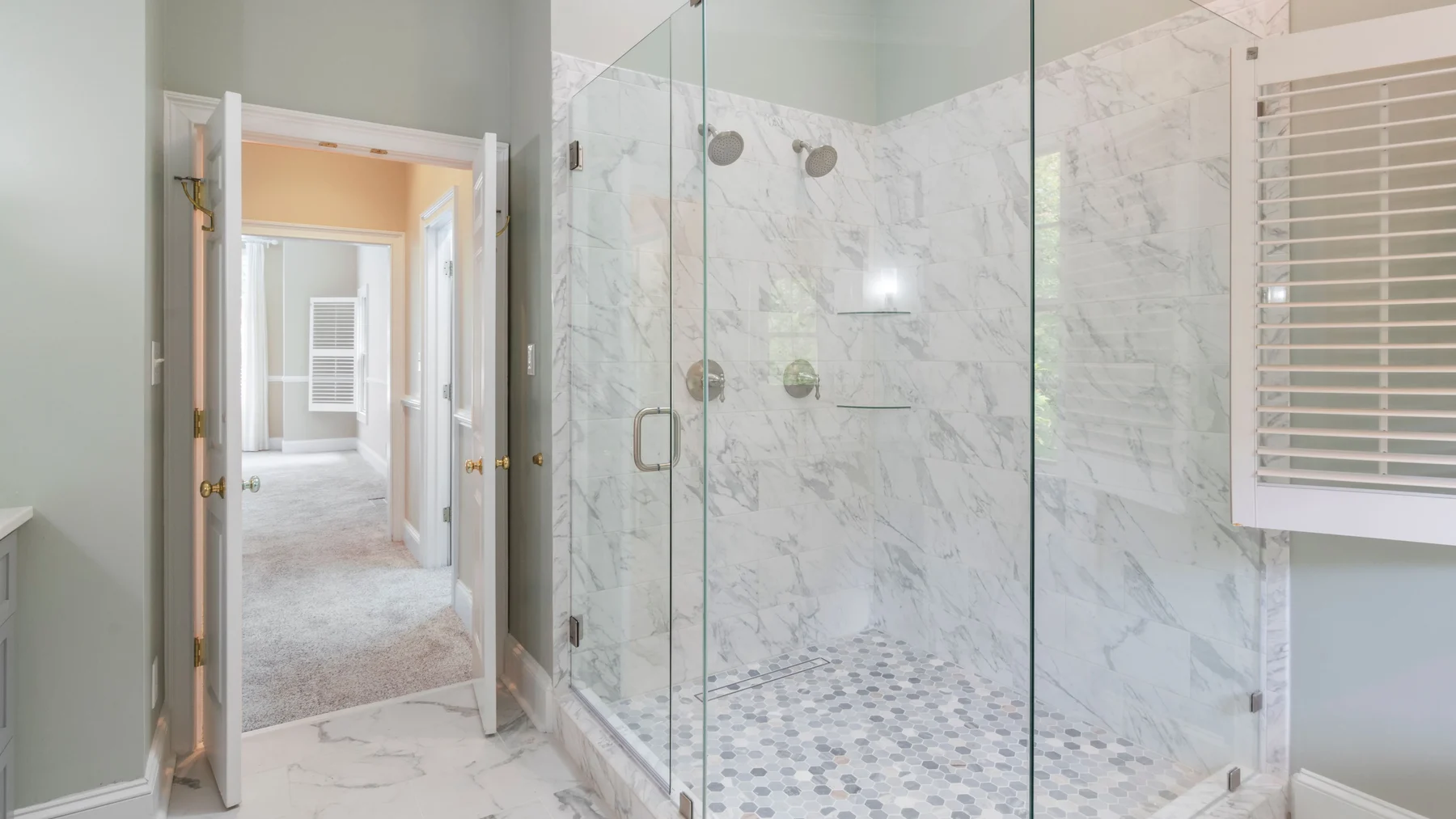
If you live in St. George, you already know our water is hard, really hard. It leaves spots on the dishes, crust on the faucets, and a chalky film on shower glass, and it is just as tough on tile, grout, and especially natural stone. The good news is that with the right material choices and sealing, you can have beautiful tile that stays looking new instead of constantly fighting mineral buildup. Here is how to choose tile, grout, and sealant that stand up to Southern Utah's hard water.
Hard water is simply water carrying a heavy load of dissolved minerals, mainly calcium and magnesium. When it evaporates on a surface, those minerals stay behind as scale, the white, crusty film you see on shower doors and around faucets. On tile, that scale builds on the glaze, in the grout lines, and on any stone. Worse, on natural stone the minerals combined with acidic cleaners can etch the surface, leaving dull, rough spots that are hard to reverse. Understanding this is the first step to choosing materials that resist it rather than showcase it.
For St. George, porcelain tile is the standout choice. It is fired dense and is essentially non-porous, so water and minerals cannot soak in, and its hard glazed surface resists etching from both hard water and cleaners. Scale that does form wipes away far more easily than it does from porous surfaces. Large-format porcelain has the added benefit of fewer grout lines, and grout is where a lot of hard-water grief lives. For showers, backsplashes, and floors in our water, porcelain gives you the look you want with the least maintenance, which is why we recommend it so often here.
Natural stone, marble, travertine, limestone, and slate, is undeniably gorgeous, and plenty of St. George homeowners love it. But it is porous and, in the case of calcium-based stones like marble and travertine, chemically vulnerable to etching from hard water and acidic products. If you want stone, go in with eyes open: it will require diligent sealing and gentle, pH-neutral cleaning, and it is better suited to lower-moisture areas than a hard-water shower unless you commit to the upkeep. We will tell you honestly where stone will thrive in your home and where our water will make it a headache.
Grout is the unsung hero, or villain, of hard-water maintenance. Traditional cement grout is porous, soaking up water and minerals and staining and crusting over time unless it is well sealed. Epoxy grout, by contrast, is essentially non-porous, stain-resistant, and stands up beautifully to hard water and cleaning, making it an excellent choice for St. George showers and backsplashes despite its higher cost and trickier installation. Choosing the right grout, and sealing cement grout properly if you use it, has a huge effect on how easy the tile is to keep clean for years.
Sealing is critical for any porous surface in our water. A quality penetrating sealer soaks into stone and cement grout and creates a barrier that repels water, minerals, and stains, so hard-water scale sits on top to be wiped away rather than soaking in and etching. Porcelain tile itself does not need sealing, but its grout usually does. Sealers wear over time and need periodic reapplication, especially in wet areas, so it becomes part of routine care. Following the material maker's guidance and the standards from the Tile Council of North America keeps the protection effective.
Beyond materials, design can reduce hard-water headaches. Fewer grout lines through large-format tile means less to clean, a squeegee kept in the shower knocks down scale before it sets, and simpler, wipeable surfaces beat heavily textured ones that trap minerals. Some homeowners pair their tile with a whole-home water softener, which dramatically cuts scale on every surface and is worth considering in St. George. Designing with the water in mind from the start is far easier than battling buildup on a surface that was never chosen for our conditions.
Even the best materials benefit from simple upkeep. Wipe or squeegee wet surfaces, clean with pH-neutral products rather than acidic descalers that can etch stone, address scale before it hardens, and reseal porous surfaces on schedule. With porcelain and epoxy grout, routine cleaning is usually all it takes; with stone and cement grout, a bit more diligence keeps them beautiful. None of it is difficult once the right materials are in place, which is the whole point of choosing them thoughtfully up front.
It helps to know which surfaces take the worst of St. George's water so you can prioritize the toughest materials there. Showers are ground zero, they are wet many times a day and rarely dry fully, so the glaze, grout, and any stone see relentless scale, which is why porcelain and epoxy grout earn their keep in a shower here. Kitchen backsplashes behind the sink and range catch splashes and mineral spots and benefit from a wipeable, non-porous surface. Bathroom vanity tops and floors near tubs see moderate exposure, while a living-area accent wall or fireplace surround stays essentially dry and gives you more freedom to use stone or delicate materials. Matching the material to the moisture level room by room means you spend on hard-water-proof surfaces where they matter and enjoy the freedom to use whatever you love where the water never reaches. We walk through your home area by area during design so every surface gets the right material for how wet it actually gets, which is the practical secret to tile that stays beautiful across an entire St. George house.
St. George's hard water is unavoidable, but crusty, etched tile is not. Choose porcelain and epoxy grout for the wet, high-use areas, treat natural stone as the higher-maintenance luxury it is here, seal every porous surface, and design for easy cleaning. Do that and your tile will stay looking new for years despite our water. Tell us about your project and we will spec materials that beat Southern Utah's hard water instead of surrendering to it.
St. George has very hard water, loaded with dissolved minerals, and when that water evaporates on your tile and grout it leaves those minerals behind as scale. Showers and backsplashes see it worst because they get wet constantly. On natural stone, the minerals and any acidic cleaners can also etch and dull the surface. Choosing scale-resistant materials and sealing properly is what slows that buildup dramatically.
Sealing is essential for natural stone and for cement grout, which are porous and otherwise soak up water, minerals, and stains. A quality penetrating sealer makes those surfaces far easier to wipe clean and much more resistant to hard-water staining and etching. Porcelain tile itself is basically non-porous and does not need sealing, but its grout usually does. We match the right sealer to your specific surfaces and reapply guidance to your material.
How Much Does Tile Installation Cost in St. George? A 2026 Pricing Guide — Custom tile designed and installed across St. George and Washington County.