The bathroom is where tile does its best work, and it is the room St. George homeowners most often reimagine, whether updating a dated master bath in an established Washington neighborhood or finishing a new build in Ivins. Tile choices there set the entire mood, from a spa-like retreat to a bright, clean everyday space. This guide gathers practical bathroom tile ideas that look great and, just as important, hold up to Southern Utah's very hard water and desert light. These are design directions we are installing across Washington County right now.
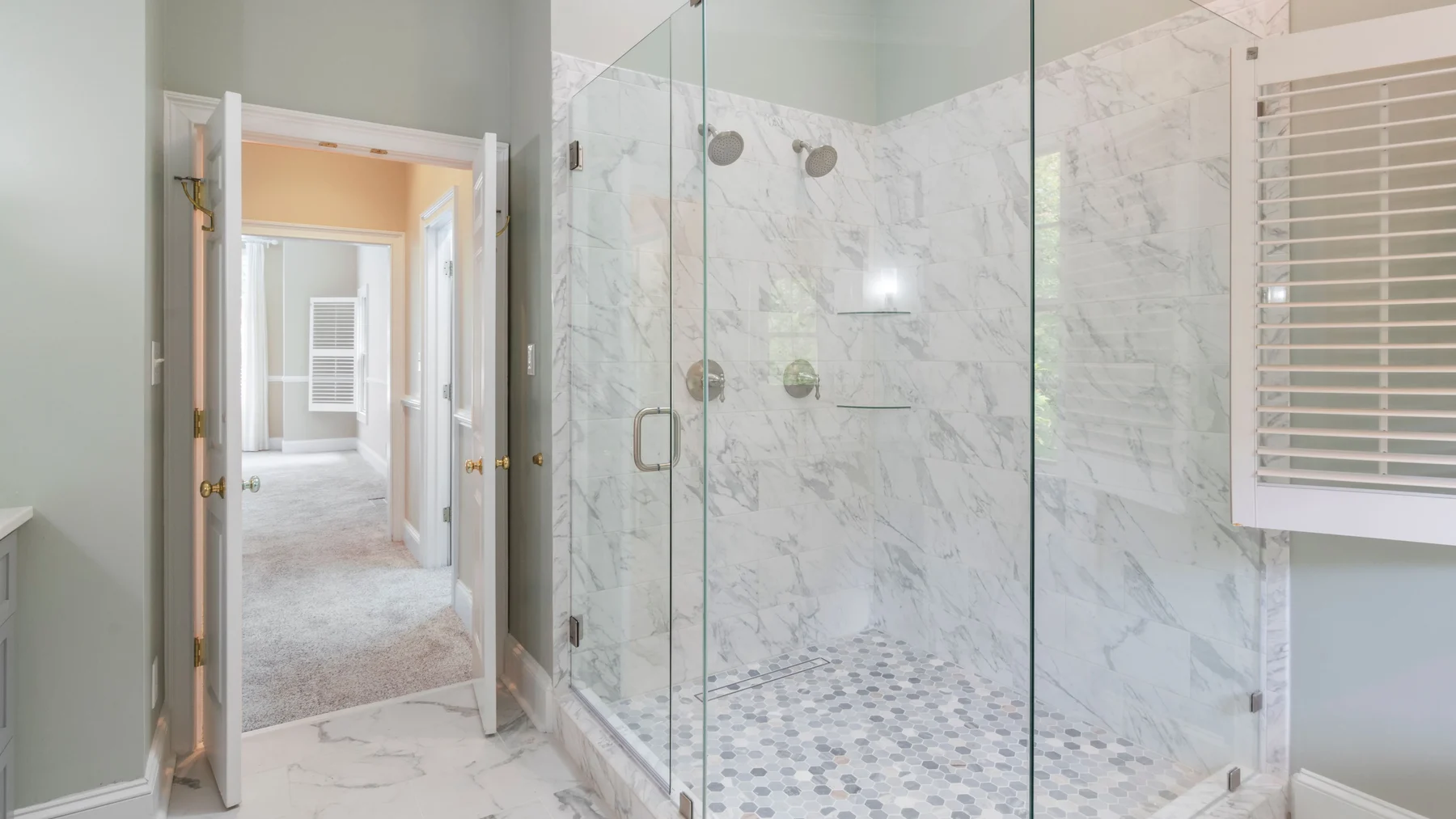
The biggest shift in St. George bathrooms is the curbless, fully tiled walk-in shower. Removing the curb creates a seamless, open look, makes the bathroom feel larger, and, not incidentally, makes the shower far more accessible, a meaningful draw in our many active-adult and retiree households. Done right, a curbless shower relies on precise floor sloping and, critically, proper waterproofing beneath the tile. This is not a place to cut corners; the beauty is on the surface, but the performance is in the membrane underneath. Paired with large-format wall tile, a curbless shower is both striking and easy to keep clean.
A tiled niche recessed into the shower wall has become a near-standard request, and for good reason: it gives you a clean, built-in spot for bottles instead of a cluttered corner caddy. Design-wise, a niche is a chance to add interest, lined in an accent tile, a mosaic, or a contrasting stone-look that pops against the main field tile. Getting the placement, size, and especially the waterproofing right matters, since a poorly built niche is a leak waiting to happen. When it is done well, it is one of those details that makes a shower feel custom and considered.
St. George's setting practically writes the palette. Warm sandy tones, terracotta, and the reds and rusts of the surrounding red rock feel at home here, and many homeowners lean into that with earthy tile that echoes the Zion-area landscape. Natural stone looks, travertine, marble, and limestone, bring organic texture, though in true stone form they demand sealing against our hard water; high-quality porcelain that mimics stone offers the same look with far less maintenance. Soft, light neutrals also remain popular for keeping bathrooms bright under the intense desert sun that pours through so many local homes.
Wood-look porcelain plank continues to be a favorite for bathroom floors, delivering the warmth of wood with the waterproof durability tile demands, perfect for a room that sees splashes and steam. For homeowners wanting more personality, patterned and encaustic-look tiles make a bold statement on a bathroom floor or a powder-room feature, adding character without wallpaper or paint that our humidity swings can affect. On floors especially, a slightly textured or matte finish is wise for grip when wet, a point worth raising with anyone in the home concerned about slips.
Feature walls have moved from kitchens into bathrooms. A single accent wall, behind the vanity, in the shower, or behind a freestanding tub, in a bold or textured tile gives a bathroom a focal point without overwhelming it. Vertical tile layouts, including stacked large-format and vertically run subway tile, draw the eye upward and make a room feel taller, a nice trick in standard-height bathrooms. Fluted and three-dimensional tiles add tactile interest and shadow play that looks especially rich in our strong natural light. Manufacturers like Daltile showcase current tile collections at daltile.com.
Here is where local knowledge separates a bathroom that stays beautiful from one that looks tired in two years. St. George's very hard water leaves mineral crusting on grout and etches unsealed natural stone, so the smartest bathroom tile plans design around it. Larger tiles with less grout, darker or mineral-hiding grout colors, quality stain-resistant grout, and porcelain over unsealed stone all fight the hard-water battle. Glass and polished surfaces show water spots most, so many homeowners favor matte and textured finishes that disguise them. Building these choices in from the start means far less scrubbing later. Our hard-water tile guide goes deep on this.
Even in the desert, our winter mornings get cold, and radiant heated tile floors have become a sought-after upgrade in St. George master baths, adding a touch of everyday luxury under bare feet. Other spa-like touches, a bench built into the shower, dual shower niches, a large rain-shower area, and continuous large-format tile from floor to ceiling, turn a functional bathroom into a retreat. These features are best planned before tiling begins, since the waterproofing, slope, and layout all have to accommodate them from the start.
One idea that elevates a bathroom more than any single trendy tile is thinking about how the surfaces work together rather than choosing each in isolation. A common and successful approach in St. George homes is to let one material be the star, say a beautiful large-format shower wall or a bold patterned floor, and keep the rest supporting and calm so the room does not feel busy. Carrying the same floor tile into the shower, with only a change in size or texture for slip resistance, creates a seamless, spacious feel that is especially effective in smaller bathrooms. Repeating the shower niche accent tile somewhere else, as a thin band behind the vanity or on a small feature, ties the room together. Coordinating grout colors across floor, walls, and shower keeps the palette cohesive instead of patchwork. It also pays to consider how the tile relates to the vanity, the countertop, and the fixtures, since a warm, desert-toned tile can clash with a cool-gray vanity if the undertones are not considered. Looking at physical samples together, in the actual bathroom under both the bright Southern Utah daylight and the evening vanity lighting, prevents the mismatches that photos never reveal. This whole-room thinking is exactly what a tile professional brings to a project, and it is the difference between a bathroom that feels designed and one that feels like a collection of separate decisions. Planning it out before the first tile is set is the surest path to a result you will still love years from now.
When you are ready to move from inspiration photos to a real plan, we can help you translate the look you love into materials that will thrive in our climate.
The best bathroom tile combines a look you love with materials and details suited to St. George living: a properly waterproofed shower, hard-water-smart tile and grout, slip-aware floors, and a palette that fits the desert light. Whether you want a bright, clean everyday bath or a red-rock-inspired spa retreat, the design and the installation both have to be right. We are glad to walk your space, talk through ideas, and build a bathroom that looks stunning and holds up here. If a shower conversion is part of your plan, our tub-to-shower conversion guide is a useful next read.
Larger tiles with less grout, quality stain-resistant grout in a mineral-hiding color, and porcelain rather than unsealed natural stone all stand up best to our very hard water, which crusts grout and etches stone. Matte and textured finishes also disguise the water spots that plague glass and polished surfaces, so the bathroom stays looking clean with far less scrubbing.
Yes, and they are increasingly popular here. Removing the curb creates a seamless, open look, makes the bathroom feel larger, and improves accessibility, which appeals to our many active-adult and retiree households. The key is precise floor sloping and proper waterproofing beneath the tile, since the performance is in the membrane underneath the beautiful surface.
How Much Does Tile Installation Cost in St. George? A 2026 Pricing Guide — Custom tile designed and installed across St. George and Washington County.