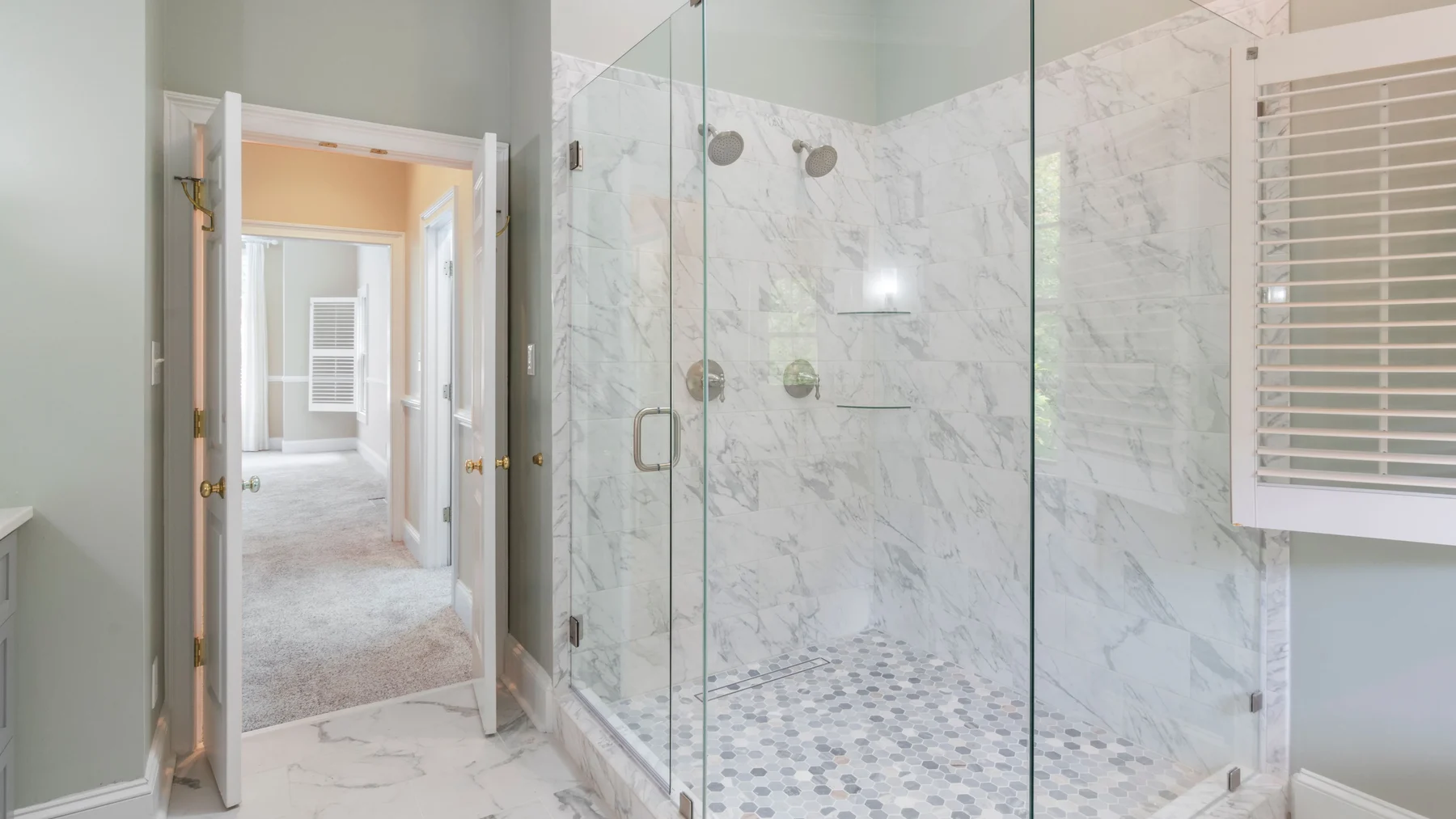
Walk through almost any new build in St. George or a recent remodel in Washington or Ivins and you will notice tile is getting bigger. Large-format tile, generally meaning tiles with at least one side of fifteen inches or more, has taken over showers, floors, and feature walls across Southern Utah, and for good reason. It creates a clean, expansive, high-end look with fewer grout lines. But bigger tile is not automatically better for every project, and it demands more from the installation. This guide covers the real pros, the honest cons, and what large-format tile costs here in Washington County.
The appeal starts with the look. Fewer grout lines mean a cleaner, more seamless surface that makes a space feel larger and more modern, which suits the open, light-filled floor plans of the area's new-construction boom. On a shower wall or a great-room floor, large tile reads as calm and luxurious. There is also a practical local win: fewer grout lines mean less grout, and grout is exactly what suffers most from St. George's very hard water, which crusts and discolors it over time. Less grout is less of the material most likely to look bad in our conditions, which is a genuine advantage beyond aesthetics.
Large-format tile carries a few functional benefits. Less grout means less to clean and seal and fewer lines to trap grime, a real plus in our hard-water environment. On floors, big tiles can make a room feel more expansive and are well suited to the open, contemporary interiors popular in Santa Clara and the St. George suburbs. Large-format porcelain in particular is dense, durable, and low-maintenance, standing up to the sandy grit that inevitably gets tracked in from our red-rock landscape. For homeowners who want a striking, low-upkeep surface, it checks a lot of boxes.
Large tile is less forgiving, and pretending otherwise sets homeowners up for disappointment. The biggest issue is the substrate: big tiles need a very flat surface, because any dip or hump in the floor or wall causes lippage, where one tile edge sits proud of its neighbor. That is unacceptable with large format and unavoidable if the substrate is not properly flattened first. Large tiles are also heavier and harder to handle, cut, and set, which is why professional installation matters so much more here than with small tile. And while fewer grout lines look great, they also mean less traction underfoot on floors, a consideration we will return to for wet areas.
This is the point that separates a beautiful large-format install from a disappointing one. Industry standards call for a much flatter substrate for large tiles than for small ones, and achieving that often means the installer must level the floor or wall with additional prep before a single tile goes down. On the slab-on-grade construction common throughout St. George, that can mean skim-coating or self-leveling to correct dips. A proper large-format install also uses a medium-bed or large-tile mortar and full back-buttering to ensure complete coverage under the tile, which prevents hollow spots and cracks. The Tile Council of North America publishes the standards professionals follow at tcnatile.com. Skipping this prep to save money is the number one cause of failed large-format jobs.
Pricing has two parts: the tile and the installation. The tile itself ranges widely, from affordable large porcelain to premium stone-look and true natural stone slabs. Installation of large format typically costs more per square foot than standard tile because of the extra substrate prep, the specialized mortar and tools, and the labor and often the second set of hands needed to set heavy pieces accurately. When comparing quotes in St. George, make sure each one includes the necessary flattening and leveling; a suspiciously low bid usually means that critical prep is being skipped. For a fuller breakdown, our St. George tile installation cost guide covers pricing across tile types.
Large format shines on shower walls, where the minimal grout looks clean and resists hard-water buildup, on open living-area and kitchen floors where the expansive look pays off, and on feature walls and fireplace surrounds. It is a favorite in the master baths of the area's active-adult communities for its upscale, easy-clean appeal. It is less ideal on small, choppy floors cut up by many angles, where big tiles require a lot of cutting and lose their seamless advantage, and it needs a slip-conscious approach in wet areas. Matching the tile size to the space is part of good design.
Even with large-format tile, the smaller decisions shape the final result. Grout color is worth real thought here: a grout that closely matches the tile plays up the seamless, monolithic look most homeowners are after, while a contrasting grout emphasizes the grid, which is rarely the goal with large format. Given St. George's hard water, choosing a grout color that hides mineral staining, and using a quality grout with good stain resistance, keeps the lines looking clean far longer. Layout matters too; a good installer plans the tile placement so you avoid thin, awkward slivers at the walls and so any necessary cuts land in less visible spots, which is more challenging and more important with big tiles because a bad cut is a big, obvious cut. On walls, the pattern is usually a simple stacked or minimal-offset layout rather than a traditional running bond, because large tiles have slight bowing that a big offset would exaggerate into lippage. Transitions where large tile meets another flooring material, or turns a corner, need proper trim or a mitered edge to look finished. None of these details are visible to a homeowner flipping through inspiration photos, but together they are what make an installed large-format project look as good in person as it did in the showroom. A tile professional who sweats these details is what turns an expensive material into a result you are proud of every day.
If you are drawn to the seamless look but unsure whether your floors are flat enough, that is exactly what we check first during an on-site assessment, so there are no surprises once the tile arrives. Getting that answer up front is far cheaper than discovering a leveling problem mid-install.
We are always happy to talk through whether large format is the right call for your particular room before you commit to the material.
A short conversation now can save you real money and frustration later.
Large-format tile delivers a genuinely upscale, low-grout, low-maintenance surface that suits St. George's modern homes and hard-water reality, but only when it is installed on a properly flattened substrate with the right mortar and technique. The look is worth it; the shortcut is not. If you love the seamless appearance, the smart move is to invest in an installer who does the prep correctly. We are glad to assess your space, handle the leveling our slab-on-grade homes often need, and set large-format tile that lays flat and lasts.
Big tiles cannot flex to follow dips or humps, so any unevenness in the floor or wall shows up as lippage, where one tile edge sits higher than the next. Industry standards require a much flatter substrate for large format, which on St. George's slab-on-grade homes often means self-leveling or skim-coating first. Skipping that prep is the number one cause of failed large-format jobs.
Yes, in a sense. Large tiles have fewer grout lines, and grout is exactly what suffers most from our very hard water, crusting and discoloring over time. Less grout means less of the material most likely to look bad here, plus less to clean and seal. It is a real advantage beyond just the modern, seamless look.
How Much Does Tile Installation Cost in St. George? A 2026 Pricing Guide — Custom tile designed and installed across St. George and Washington County.