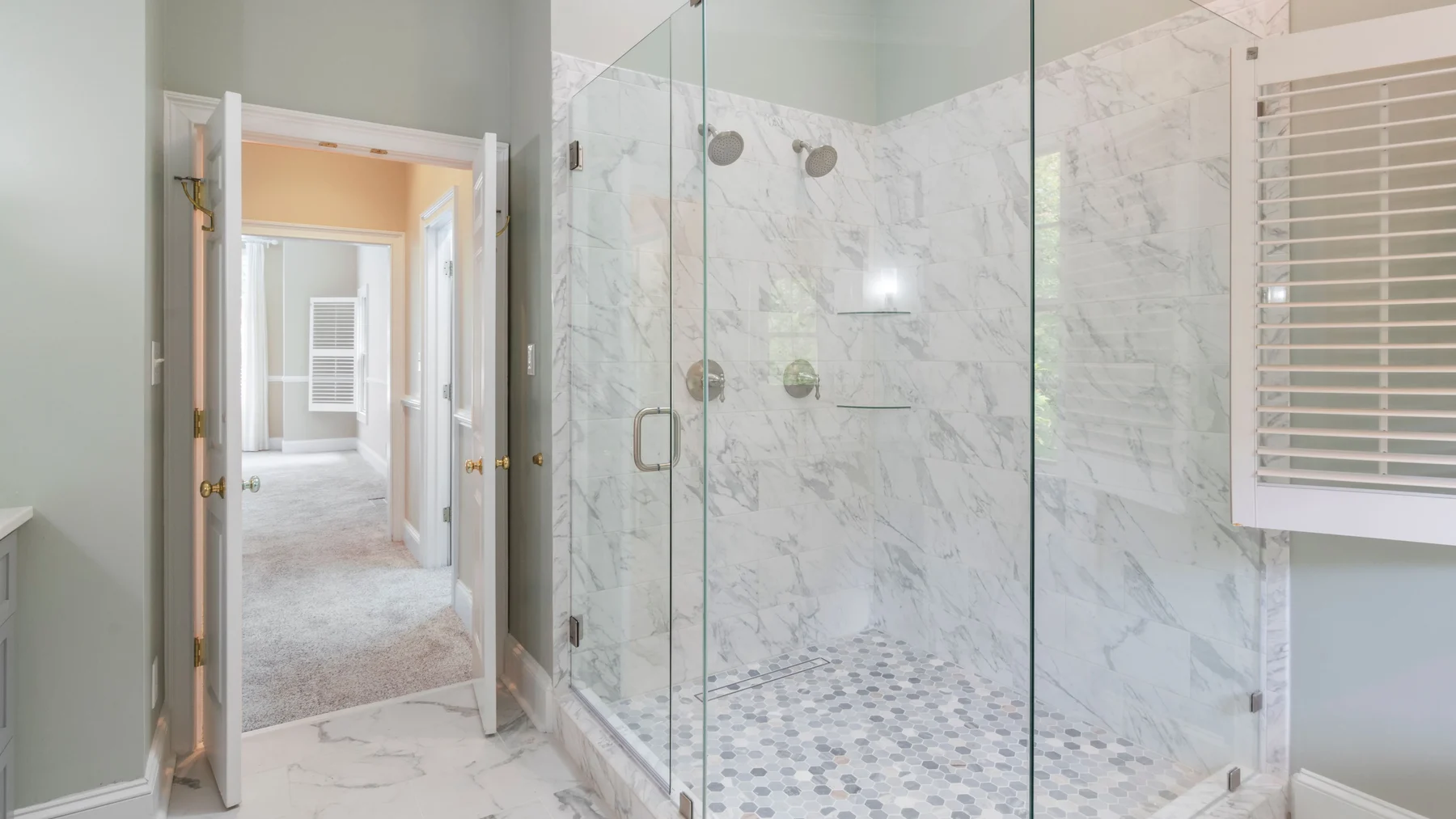
Grout is the detail that makes or breaks a tile job, and in St. George it carries extra weight because our hard water is brutal on it. The grout color you choose and whether you seal it, or use a grout that does not need sealing, determines how your tile looks on day one and whether it still looks good after a few years of Southern Utah mineral buildup. This guide covers choosing grout color and the sealing question so your tile stays beautiful in our demanding desert water.
St. George has notoriously hard water, loaded with calcium and other minerals that leave white, chalky deposits on everything they touch. On tile, that mineral residue collects in and on the grout lines, dulling and discoloring them over time, especially in showers and around faucets. Grout is porous by nature, so it both stains and absorbs these minerals readily. That is why grout selection and protection matter more here than in soft-water regions, where a grout choice is mostly cosmetic. In Washington County, it is also about maintenance and longevity.
Color choice is part aesthetics, part strategy. Stark white grout looks crisp but shows every bit of hard-water crust, dirt, and discoloration fastest, meaning constant scrubbing in our climate. Very dark grout hides dirt but can show the white mineral residue our water leaves behind. The sweet spot for many St. George homes is a mid-tone grout, a greige, soft gray, or tan, that masks both dirt and mineral buildup and stays looking clean far longer. We help homeowners pick a color that fits the design but also survives the reality of our water.
Beyond durability, grout color sets the look. A grout that contrasts with the tile emphasizes the pattern and the shape of each tile, which is striking with a herringbone or subway layout. A grout that matches the tile makes the surface read as one continuous field, which suits large-format floors and a minimal look. Neither is right or wrong, but in St. George we always factor the hard-water angle into the choice, steering clients away from the stark-white-grout-with-white-tile combination in high-use wet areas unless they truly want the upkeep.
Traditional cement-based grout is porous and must be sealed to resist staining and moisture, and in our hard-water environment that sealing is not optional if you want it to last. A penetrating sealer soaks into the grout and helps repel water and minerals, slowing the buildup and making cleaning far easier. Sealer is not permanent, though, and needs reapplication periodically, more often in heavy-use showers. Many homeowners do not realize their grout was supposed to be sealed and resealed, which is why so much St. George grout looks tired before its time.
For showers and other wet or hard-water-heavy areas, epoxy grout is often the smarter long-term choice. Unlike cement grout, epoxy is non-porous, so it does not absorb water or minerals and never needs sealing. It resists stains, holds its color, and stands up to our hard water dramatically better, which is a real advantage in a St. George shower. It costs more and is trickier to install, requiring an experienced hand, but for the areas that take the most abuse it frequently pays off in looks and maintenance over the years.
Whatever grout you choose, a little routine care goes a long way here. Wiping down shower walls to remove mineral-laden water before it dries, using a squeegee, and cleaning with products appropriate for your grout and tile all slow the hard-water crust. Avoid harsh acidic cleaners on natural stone and on cement grout, as they can etch and erode. For homes on our municipal supply, a water softener also dramatically reduces the mineral load hitting your grout in the first place, which protects the whole home, not just the tile.
Grout does not last forever. Cement grout should be resealed periodically, and when grout becomes cracked, crumbling, or permanently discolored despite cleaning, regrouting restores the look without replacing the tile. If you are not sure whether your grout just needs a deep clean and reseal or has reached the end, we can assess it. Often a St. George shower that looks worn only needs regrouting and resealing rather than a full tear-out, which is a far smaller project than homeowners fear.
How wide the grout lines are also shapes the result and the upkeep. Tighter grout lines give a cleaner, more seamless look and leave less grout surface for hard-water minerals to collect on, which is a quiet advantage in St. George. Wider lines suit rustic or handmade tile and certain patterns but mean more grout to keep clean. The tile itself sets limits, since rectified large-format tile allows very thin lines while handmade or irregular tile needs more room. We match the grout width to the tile and to the goal of keeping maintenance low in our water.
A detail many installations get wrong is using grout in spots that should be caulk. Changes of plane, where a shower wall meets the floor, inside corners, and where tile meets a tub or countertop, should be filled with a flexible color-matched caulk, not rigid grout. Those joints move slightly, and grout in them cracks and lets water through, which in a St. George shower invites exactly the moisture problems you want to avoid. Getting the grout-versus-caulk decision right at every joint is part of a watertight, lasting installation.
On every St. George project we treat grout as a system, not an afterthought: the right color for the design and the hard water, the right product, cement sealed properly or epoxy where it earns its keep, the right line width, and flexible caulk at the moving joints. We also show homeowners how to care for it so the work keeps looking good. It is the small decisions around grout that most often separate tile that still looks great in five years from tile that looks tired in two.
Grout is a small part of a tile job but a huge part of how it looks and lasts, and in St. George hard water it deserves real attention. Choose a mid-tone color that hides mineral residue, seal cement grout and keep it sealed, or step up to epoxy grout in the wettest areas, and keep up simple cleaning. Do that and your tile stays looking fresh for years. We factor all of this into every installation and are glad to advise on the right grout strategy for your Southern Utah home.
A mid-tone grout such as greige, soft gray, or tan is usually best. Stark white shows hard-water crust, dirt, and discoloration fastest and demands constant scrubbing, while very dark grout can show the white mineral residue our water leaves. A mid-tone hides both and stays looking clean far longer, which matters a lot in our mineral-heavy Southern Utah water.
Often yes, for showers and other wet or hard-water-heavy areas. Epoxy grout is non-porous, so it never needs sealing and resists the stains and mineral buildup that plague cement grout here, holding its color far better. It costs more and must be installed by an experienced hand, but in the areas that take the most abuse it usually pays off in looks and lower maintenance over the years.
Expert grout selection, sealing, epoxy grout, and regrouting for homes across St. George and Southern Utah.