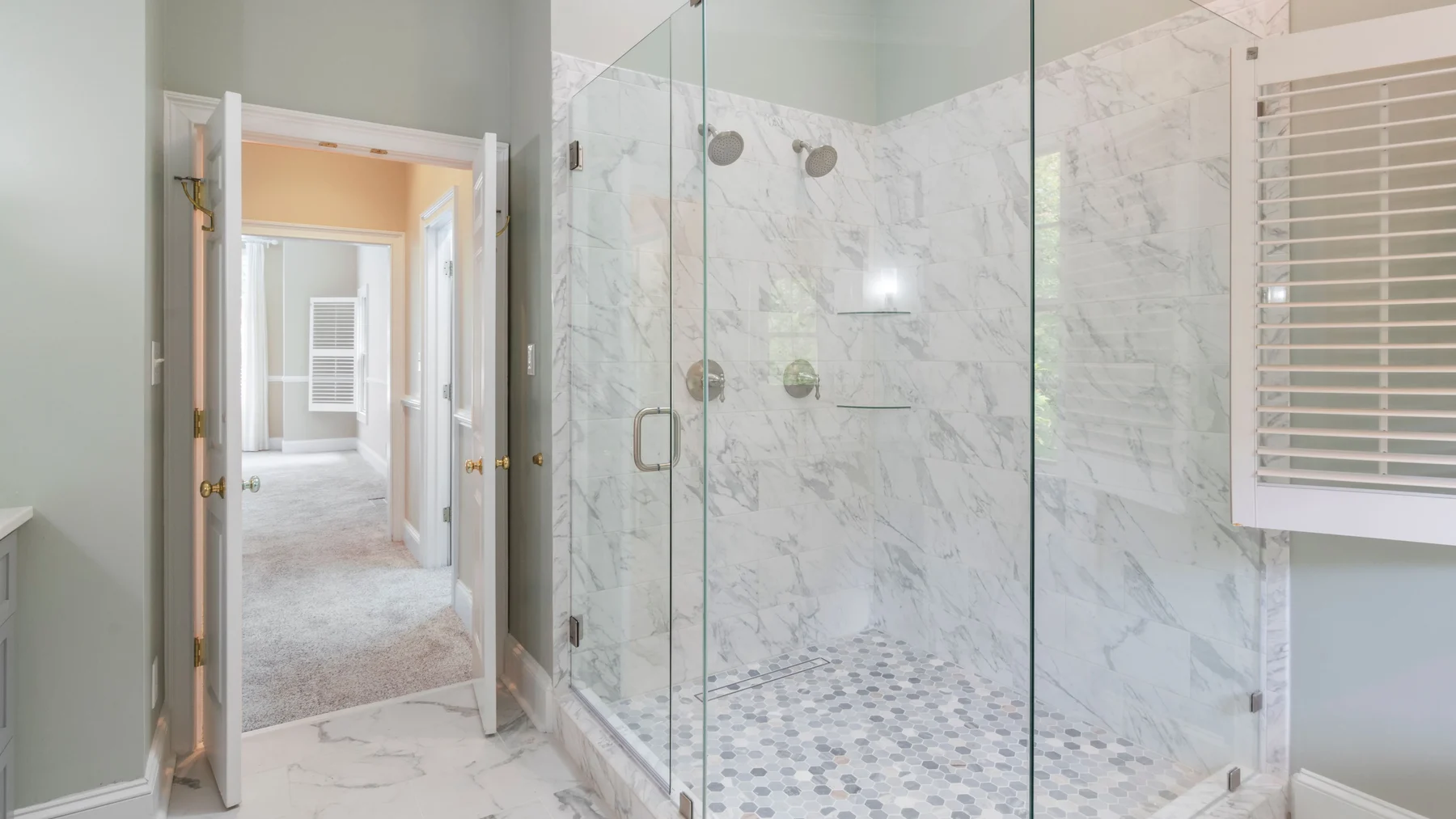
St. George has some of the hardest water in the region, and anyone who has scrubbed a shower here knows what it does: chalky scale on the tile, a cloudy film on glass, and grout lines that crust and discolor. That mineral-heavy water is relentless on tiled surfaces, but with the right routine you can keep tile and grout looking clean and protect the investment you made in them. Here is how to clean and maintain tile in Southern Utah's hard water without damaging it.
Why hard water is so hard on tile
Hard water is loaded with dissolved calcium and magnesium, and when it evaporates, those minerals stay behind as scale. On glossy tile it shows as a hazy white film; on grout it builds into a crusty, discolored buildup that traps grime; and on natural stone it can actually etch and dull the surface. In St. George, where water use is high and evaporation is fast in the desert heat, this happens quickly, especially in showers and around faucets. Understanding that the enemy is mineral deposit, not just dirt, is the key to cleaning it correctly.
Everyday cleaning that works
For routine care, gentle and frequent beats harsh and occasional. A pH-neutral tile cleaner and a soft cloth or mop handle daily dirt without harming grout or stone. In the shower, the single most effective habit is a quick squeegee of the tile and glass after each use, which removes the water before its minerals can dry into scale. That one thirty-second step prevents most of the buildup St. George homeowners fight. Drying faucets and fixtures after use does the same. Prevention through quick drying is far easier than scrubbing off cured scale later.
Tackling existing hard-water buildup
When scale has already formed, you need to dissolve the minerals. Mild acidic cleaners formulated for hard-water deposits work on porcelain and ceramic, and they cut the chalky film that neutral cleaners cannot touch. The important caveat is that acids must never be used on natural stone like marble or travertine, which they will etch permanently. For stubborn shower buildup, a specialized hard-water remover applied and given time to work, then rinsed and dried, restores the tile. Always test any stronger cleaner in an inconspicuous spot first, because our tile and grout vary in what they tolerate.
Caring for the grout
Grout suffers most in hard water because it is porous and sits in the wettest spots. Mineral buildup crusts the joints, and trapped moisture and soap encourage discoloration. Regular gentle scrubbing with a soft brush keeps grout lines clean, and a periodic deeper clean tackles buildup before it sets. The real protection, though, is sealing: a quality penetrating sealer keeps water and minerals from soaking into the grout in the first place. In St. George, resealing grout on a regular schedule is one of the highest-value maintenance habits there is.
What not to use
The wrong products cause lasting damage. Never use acidic cleaners, including vinegar, on natural stone, and avoid harsh abrasive pads that scratch glazed tile and dull finishes. Steer clear of oily soaps that leave a residue minerals cling to, and be cautious with bleach on colored grout, which it can lighten unevenly. Many all-purpose sprays are too harsh for regular tile use. When in doubt, a pH-neutral cleaner is safe on virtually everything, and matching stronger products to the specific tile and problem prevents the self-inflicted damage we see too often.
Protecting natural stone tile
If your home has marble, travertine, slate, or other natural stone, hard water demands extra care. Stone must be sealed and resealed to resist staining and etching, cleaned only with stone-safe pH-neutral products, and never exposed to acids. Water spots on stone should be dried promptly. Because natural stone is common in the upscale St. George and Ivins homes chasing that red-rock, resort aesthetic, protecting it from our aggressive water is essential. Neglected stone dulls and etches in a way that is costly to restore, so prevention is everything.
The role of a water softener
The most powerful long-term fix is to treat the water itself. A whole-home water softener removes much of the calcium and magnesium before it ever reaches your tile, dramatically reducing scale on every surface in the house and making cleaning far easier. Many St. George homeowners find a softener pays for itself in reduced scrubbing, longer-lasting fixtures, and protected tile and stone. If you are constantly battling buildup, softening the water attacks the problem at its source rather than fighting the symptoms one shower at a time.
Seasonal deep maintenance
A couple of times a year, go beyond routine cleaning. Deep-clean the grout, remove any accumulated scale from tile and fixtures, inspect for cracked or missing grout that lets water in, and reseal grout and stone on schedule. This is also the moment to catch small problems, a loose tile, a failing caulk joint in a shower corner, before water gets behind the tile and causes real damage. Seasonal attention resets your surfaces and, in our climate, is what keeps hard water from slowly winning the long game against your tile.
When to call a professional
Some situations need more than cleaning. Grout that is crumbling, cracked, or permanently discolored, tile that has come loose, or stone that has etched and dulled all call for professional restoration. Regrouting, resealing, and refinishing can make a tired, hard-water-worn surface look new again, and it is far cheaper than replacement. We help St. George homeowners restore and protect tile across Washington, Hurricane, Santa Clara, and Ivins, so aggressive water does not shorten the life of a beautiful installation. Catching these issues early keeps a repair small.
Cleaning tools that make a difference
The right tools turn hard-water maintenance from a chore into a quick routine. A quality squeegee kept in the shower is the single most useful item, stopping scale before it forms. Soft microfiber cloths clean glass and tile without scratching, a soft-bristle grout brush reaches into the joints, and a good mop with a wringer handles floors without leaving standing water that spots. Keep your chosen pH-neutral cleaner and a separate hard-water product on hand so you always use the correct one for the job. Having these ready by the shower and under the sink means small maintenance happens consistently, which is exactly what keeps St. George minerals from ever getting a foothold on your tile.
The bottom line for Southern Utah tile
St. George hard water is tough on tile, but it does not have to win. Clean gently and often, squeegee and dry wet surfaces before minerals can set, use the right products for your specific tile, and above all keep grout and stone sealed on a regular schedule. Consider softening your water to attack the problem at its source. With that routine, tile and grout stay clean and last for decades even in Southern Utah's mineral-heavy water. And when buildup or wear gets ahead of you, restoration beats replacement, and we are glad to help.